What Happened
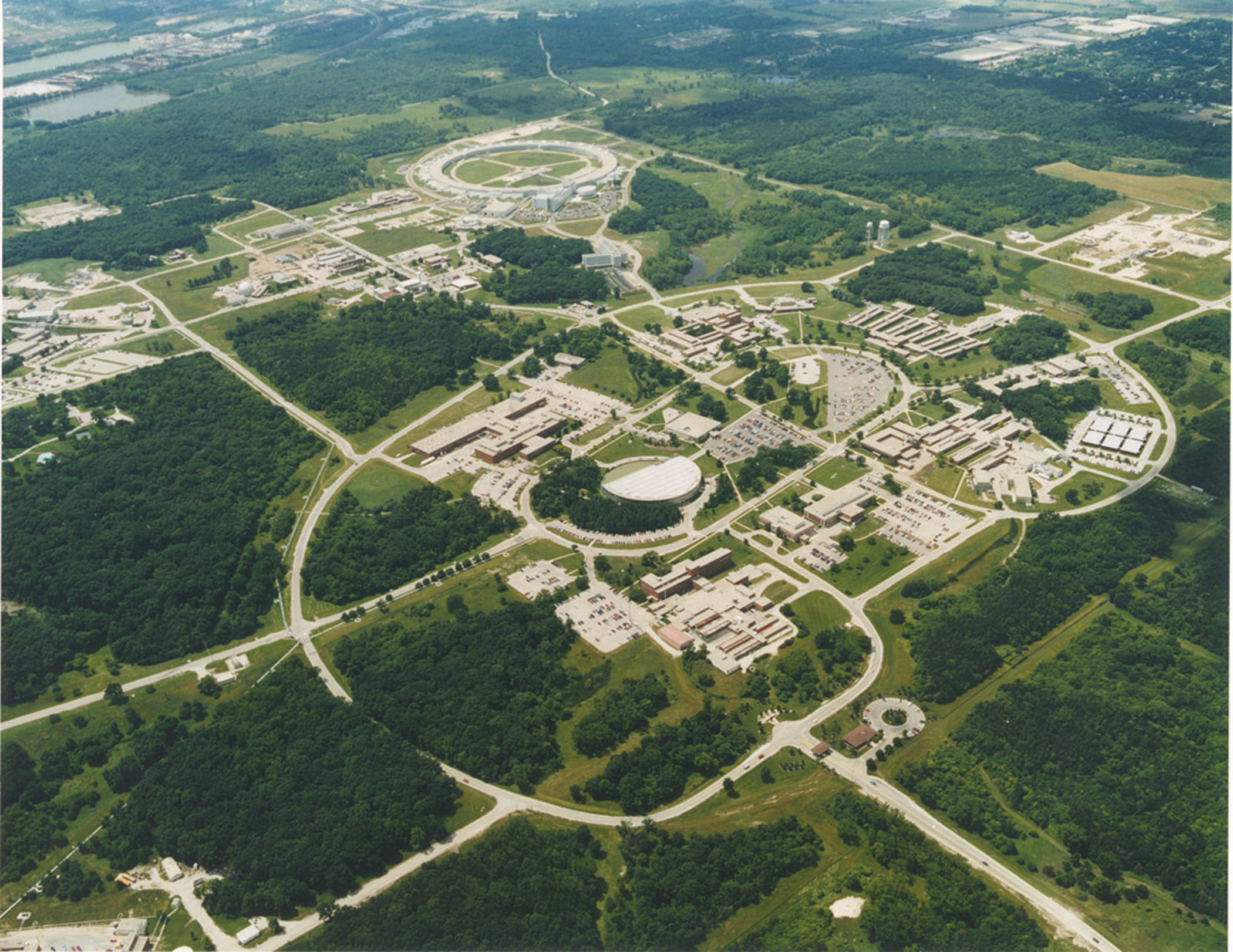
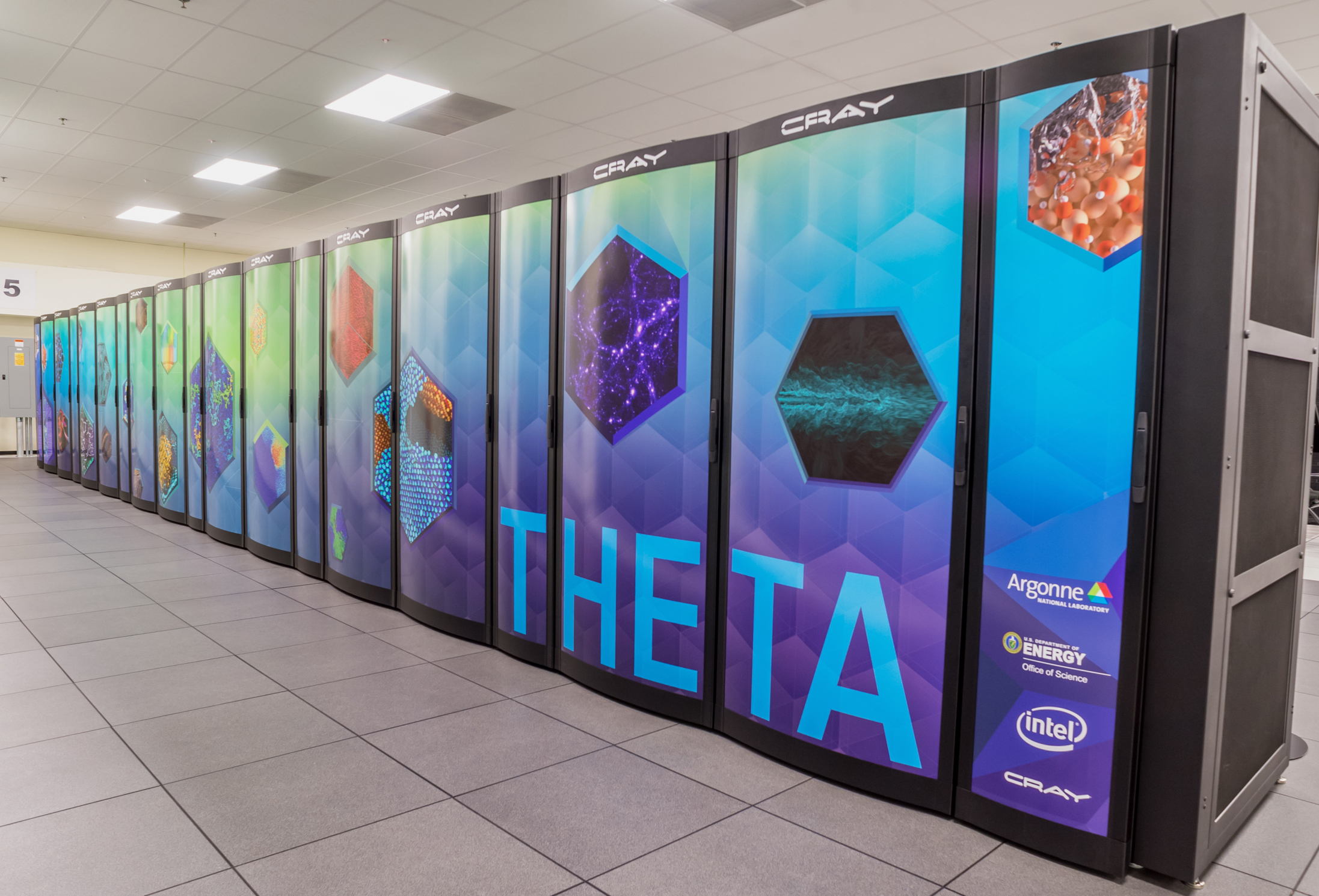
On May 27, 2026, Argonne National Laboratory announced the launch of what it calls the first large-scale artificial intelligence inference service for open science, a platform that gives publicly funded researchers cloud-style access to a deep menu of foundation models without forcing each team to assemble its own GPU stack. The service is operated by the Argonne Leadership Computing Facility, a Department of Energy Office of Science user facility, and rides on three of Argonne’s production systems — the Aurora exascale machine, the NVIDIA DGX A100 cluster known as Sophia, and the SambaNova SN40L cluster known as Metis — tying disparate hardware into a single inference fabric researchers can call into from a laptop.


The available model catalog spans Google’s open-weight Gemma series, Meta’s LLaMA family, OpenAI’s GPT-OSS release, and a growing roster of domain-specific science foundation models, including in-house projects such as AuroraGPT and a set of computer vision models tuned for experimental data. Argonne is positioning the offering not as a chatbot endpoint but as a shared infrastructure layer for hypothesis-driven work, with the announcement explicitly framing inference as the bridge between the lab’s growing collection of pretrained AI models and the experimental and simulation campaigns those models were always meant to accelerate.
Michael Papka, director of the Argonne Leadership Computing Facility, described the service as a way to close the gap between model development and scientific use, noting that researchers can now apply AI at scale to their data, simulations, and experiments without the burden of building their own infrastructure. Venkat Vishwanath, the facility’s AI and machine learning lead, framed the practical impact in terms of turnaround time, saying scientists can interpret results, refine experiments, and explore complex systems in ways that were not practical before. Access is gated through home-institution credentials, and the platform is already routing workloads from teams across eight DOE national laboratories.
Why It Matters
For most of the past three years, the conversation about large models in science has centered on whether they can do the work. The Argonne announcement quietly shifts the conversation to a different question: who gets to do the work, and on whose hardware. Commercial inference clouds dominate the current landscape, but they impose contract complexity, data residency anxieties, and per-token cost structures that map poorly to long-running scientific campaigns. A national-scale inference service backed by exascale and accelerator-rich systems means a graduate student at a smaller DOE lab can, in principle, prototype against the same models a frontier biology team uses to interpret cryo-EM volumes.

There is also a structural reason this matters. The Argonne service is built on a 2025 framework, published at SC25, that argued for a parallelism-first inference layer designed around scientific workloads rather than chatbot traffic. Scientific inference looks nothing like consumer use: queries come in bursts tied to instrument cycles, payloads carry large embeddings rather than short prompts, and reproducibility matters far more than latency. By formalizing those assumptions in shared infrastructure, Argonne is trying to set defaults that propagate across the DOE complex, in much the same way that early shared HPC schedulers shaped what counted as "reasonable" computational chemistry a generation ago.
The other quiet signal is consolidation around national labs as AI orchestrators. Researchers from Los Alamos, Brookhaven, Lawrence Berkeley, Fermilab, Lawrence Livermore, Oak Ridge, Sandia, and Thomas Jefferson are listed as initial users, and the inference platform plugs into the Department of Energy’s Genesis Mission, the White House-launched initiative to build what the department calls the world’s most powerful scientific platform. That gives the rollout a mandate beyond a single laboratory’s pilot project and slots inference squarely into the federal AI infrastructure conversation.
Reaction
The early reaction from the high-performance computing community has been pragmatic rather than triumphalist. HPCwire, Nextgov, and BusinessWire all carried the announcement within hours, with the trade press emphasizing that the service is essentially a productization of capability that ALCF already possessed but had not exposed in a unified way. Researchers familiar with the rollout have publicly highlighted the speed advantage of running model inference next to the simulation data, rather than shipping that data out to a commercial cloud, a workflow that has frustrated several DOE-funded campaigns where datasets are too large or too sensitive to leave a lab’s perimeter.

.jpg)
From the policy side, the response has been more cautious. Several Washington-based observers noted that the launch arrives during an active executive-order cycle around AI testing, and that any expansion of federally hosted AI capacity will be scrutinized for governance and red-team coverage. ALCF leadership has tried to head off that scrutiny by emphasizing that the service runs on lab-controlled hardware and respects the existing access frameworks for DOE user facilities. Academic computing leaders, meanwhile, have pointed out that the offering effectively gives smaller universities a seat at the inference table without forcing them to negotiate enterprise agreements with hyperscalers.
What’s Next
The near-term roadmap is about breadth before depth. ALCF has signaled that the model catalog will grow as additional open-weight releases stabilize and as in-house science foundation models complete training on Aurora. Vishwanath has previously hinted at expanding domain-specific support for chemistry, materials science, and fusion energy — three areas where the Department of Energy has been pouring data collection investment and where inference-heavy workflows already exist. The roadmap also includes broader credentialing so that university collaborators can authenticate without standing up bespoke trust relationships with each participating lab.
.jpg)
Beyond the model lineup, the most consequential next step is integration with experimental instruments. Argonne hosts the Advanced Photon Source, one of the world’s most productive x-ray facilities, and ALCF has been moving toward closing the loop between beamline data acquisition and AI-driven analysis. The inference service is the missing middleware in that picture: a place where a model trained on Aurora can be called from an instrument control system during an experiment and return guidance fast enough to actually steer the experiment. If that loop tightens over the next year, the scientific value of the inference service may show up in beamline scheduling efficiency long before it shows up in published benchmarks.
Closing Thoughts
There is a tendency, when a national lab launches a new AI platform, to treat the announcement as another node in the arms race between hyperscalers and governments. That framing misses what is interesting here. The Argonne inference service is not trying to outcompete OpenAI on chat quality or Anthropic on agentic reasoning. It is trying to redefine what shared scientific infrastructure looks like in an era when the most useful tool a researcher can borrow may no longer be a beamtime allocation or a node-hour grant but rather an inference endpoint sitting two racks away from the petabytes their experiment just produced.


Read that way, the launch joins a longer arc that runs from the original CRAY-1 deliveries in the late 1970s, through the leadership-class machines of the early 2000s, to Aurora’s exascale debut in 2024. Each generation broadened access to compute that had previously been the privilege of a few national programs. Inference services are simply the next layer in that stack — one where the unit of borrowed capability is no longer a flop or a watt but a tokenized representation of frozen scientific knowledge. The interesting question for the rest of 2026 is whether the rest of the DOE complex, and eventually NSF-supported centers, treat this as a template worth replicating or as a one-off Argonne experiment. The early signals point toward the former.
한글 요약
아르곤 국립연구소(Argonne National Laboratory)가 2026년 5월 27일, 오픈 사이언스 연구자들을 위한 대규모 AI 추론 서비스를 공식 출범했다. 미국 에너지부 산하 아르곤 리더십 컴퓨팅 시설(ALCF)이 운영하는 이 서비스는 엑사스케일 슈퍼컴퓨터 Aurora와 NVIDIA DGX A100 클러스터(Sophia), SambaNova SN40L 클러스터(Metis)를 백엔드로 묶어, 연구자가 자체 GPU 인프라를 구축하지 않고도 다양한 파운데이션 모델을 호출할 수 있도록 했다. 제공 모델에는 구글 Gemma, 메타 LLaMA, OpenAI GPT-OSS와 함께 아르곤이 자체 개발 중인 AuroraGPT 같은 과학 특화 모델도 포함된다.
의의는 단순한 서비스 출시 이상이다. 미국 8개 국립연구소가 초기 사용자로 합류했고, 백악관이 추진해 온 'Genesis Mission' 프로그램의 하부 인프라로 자리매김했다. ALCF 디렉터 마이클 팝카(Michael Papka)와 AI/ML 책임자 벤캇 비쉬와나스(Venkat Vishwanath)는 핵심 가치를 모델과 과학 사이의 거리를 줄이는 것이라고 설명했다. 즉 상용 클라우드의 라이선스 협상이나 데이터 반출 위험 없이도, 대학원생부터 베테랑 연구자까지 같은 모델 풀에 접근할 수 있게 만드는 평등화 효과가 가장 중요하다는 평가다.
다음 과제는 추론 서비스를 실험 장치와 직접 연동하는 것이다. 아르곤이 운영하는 첨단 광자원(Advanced Photon Source)을 비롯한 사용자 시설에서 빔라인 제어 시스템이 실험 진행 중에 모델을 호출해 다음 측정 위치를 조정하는 형태의 폐쇄 루프 워크플로가 가시권에 들어왔다. 화학, 재료, 핵융합 등 데이터 집약 분야에서 추론 서비스가 어떤 속도 향상을 만들어내는지가 2026년 후반의 관전 포인트다. 자세한 내용은 아르곤의 공식 발표와 Nextgov 보도를 참고할 수 있다.