What Happened
Hyundai Motor Group has committed to deploying more than 25,000 Boston Dynamics Atlas humanoid robots across its global manufacturing footprint, a decision that turns a single procurement order into the largest humanoid rollout ever announced. The figure was confirmed to investors during the group’s capital markets briefing and reiterated in late-May updates around its U.S. expansion plan, with the bulk of the fleet earmarked for Hyundai and Kia plants in North America rather than the Korean home market.

The order absorbs roughly 83 percent of the 30,000 annual production capacity Boston Dynamics is racing to stand up by 2028, when the new Electric Atlas line is supposed to hit full output. To get there, Hyundai is wiring a fresh $26 billion U.S. investment package, including a dedicated robotics factory and a new Software-Defined Factory promotion division led by executive vice president Alpesh Patel. The first wave of robots is scheduled to land at the sprawling Hyundai Motor Group Metaplant America outside Savannah, Georgia, where electric Ioniq 5 and Ioniq 9 vehicles already roll off the line. Boston Dynamics has confirmed that 2026 Atlas production is already fully spoken for, with units routed to Hyundai’s Robotics Metaplant Application Center and to Google DeepMind for joint research, and the two companies have begun closed-door deployments at the Korean automaker’s pilot lines this spring.
Atlas itself is no longer the hydraulic stunt machine from the DARPA Robotics Challenge era. The new electric variant, which a May 18 demo from Boston Dynamics showed lifting and carrying 100-pound payloads using a reinforcement-learning controller, is engineered specifically for repetitive industrial workflows: lifting battery trays, fetching parts from kitting carts, torquing fasteners, and threading panels onto a moving body-in-white.
Why It Matters
For most of the past decade, “humanoid robots in factories” was a pitch deck phrase. A handful of pilots existed — Mercedes with Apptronik’s Apollo, BMW with Figure, Amazon with Digit — but the volumes were single- and double-digit. A 25,000-unit commitment is a step-change in scale, and crucially it is a vertically integrated one: Hyundai owns Boston Dynamics, so it is buying robots from its own subsidiary and using them inside its own plants. That collapses the usual chicken-and-egg problem of humanoid economics, where vendors need fleet data to improve the platform and customers want proof of reliability before committing volume.
The financial math, even before software margins, is also less hand-wavy than it used to be. The Korean Metal Workers’ Union pegs Atlas unit cost at roughly 200 million won (about $145,000) based on supplier filings. If that figure holds, a robot running two shifts a day amortizes against the wages of two assembly-line workers in roughly two years before maintenance — exactly the kind of payback window plant CFOs respect. The 30,000-units-per-year output target implies that Boston Dynamics is no longer the boutique research lab acquired by Google in 2013; it is on a trajectory to become, by units, one of the largest industrial robotics OEMs in the world.
There is a deeper strategic angle as well. The deployment lands inside U.S. plants at a moment when Washington is pushing reshoring through tariffs, the CHIPS Act, and EV manufacturing tax credits. By promising 25,000 humanoid robots installed on American soil — alongside a robotics factory in the U.S. — Hyundai is offering policymakers a cleaner political story than “automation replaces jobs.” The narrative becomes: AI hardware made in America, deployed in American plants, capable of running shifts that the U.S. labor market struggles to fill. The fact that Boston Dynamics manufactures Atlas at its Waltham, Massachusetts headquarters before any fleet ships south makes the supply chain story easy to defend.
Reaction
The Hyundai Motor branch of the Korean Metal Workers’ Union answered the announcement with a January 22 declaration that no Atlas robot will enter a domestic Hyundai plant without a formal labor-management agreement. The union’s statement was unusually pointed: “Not a single robot can enter the workplace without an agreement,” it said, and called Atlas a labor-cost reduction tool rather than a productivity enhancement. By April, Hyundai had quietly conceded the point on its domestic side, telling Seoul-based outlets that the Ulsan plant rebuild would proceed without Atlas units — at least until a contract is renegotiated during the 2026 summer bargaining window.

Wall Street greeted the order with cautious enthusiasm. Analysts at Barron’s and Yahoo Finance flagged the order as a first real test of fleet economics for humanoid robotics, noting that until now even the most optimistic models hinged on phantom unit volumes. Inside Boston Dynamics, the reaction has been one of organizational scramble. The company has been hiring rapidly in software-defined factory roles, opening a Robotics Parts Procurement division to lock in supply chains, and posting a new wave of openings for reinforcement-learning engineers focused on industrial manipulation. Marc Raibert’s Boston Dynamics AI Institute, spun out as a separate research arm, is reportedly contributing the dexterous-manipulation policies that let Atlas handle awkward, non-uniform parts.
The competitive field is responding, too. Tesla’s Optimus team has accelerated public demos and quietly committed to a similar in-house deployment strategy at its Texas Gigafactory. Figure has paired with BMW on a second-phase pilot at the Spartanburg plant. Apptronik’s Apollo is now operating overnight shifts at a Mercedes-Benz logistics center in Berlin. None of those programs, however, has put a 25,000-unit number on the table.
What’s Next
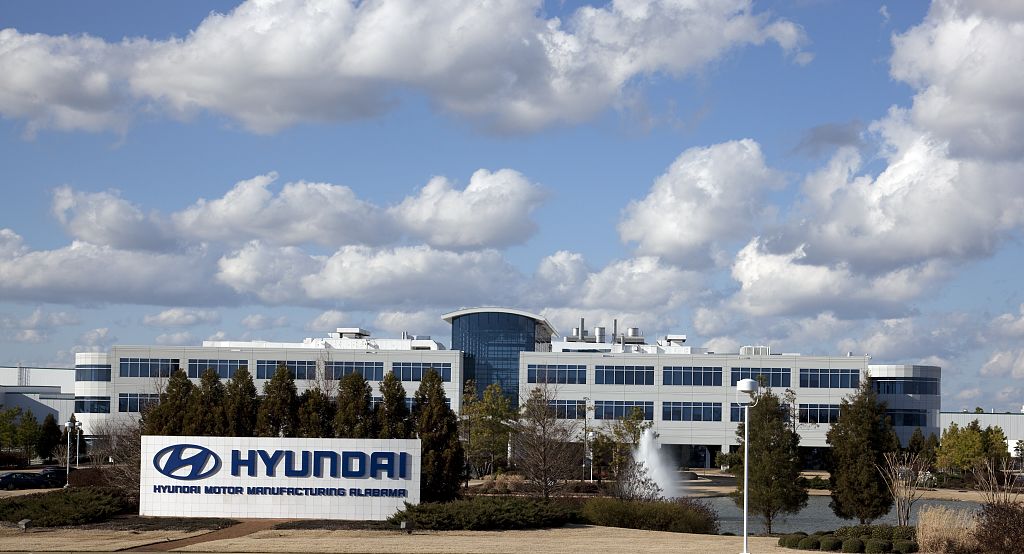
The most consequential near-term milestone is the Georgia Metaplant ramp. Hyundai has told suppliers it expects the first production-line Atlas units, working alongside human technicians on EV body assembly, to be live before the end of 2026. A staged rollout will follow at the Hyundai Motor Manufacturing Alabama plant in Montgomery and the Kia America plant in West Point, Georgia, with overseas markets — particularly the new Czech battery plant in Ostrava — coming online from 2027 onward.

On the supply side, Boston Dynamics is racing to bring online its second Waltham assembly line and a new components facility in the U.S. Southeast, both targeting 2027 commissioning. The company has signaled that the next Atlas hardware revision, scheduled for late 2027, will incorporate a higher-payload arm, an end-effector swap system, and a battery pack designed for hot-swap on the plant floor — all features tuned to the specific workflows Hyundai engineers have been logging. Boston Dynamics CEO Robert Playter has hinted that the company will open a limited pilot program to non-Hyundai industrial customers in 2028 once internal demand is satisfied.
The Korean labor track will continue to shape what the deployment looks like at home. Negotiations during the summer 2026 contract cycle will likely produce a formal protocol covering reskilling commitments, headcount floors, and shared-productivity bonuses — a template other manufacturers will study closely. On the research side, the parallel Boston Dynamics – DeepMind collaboration, anchored by a fleet of Atlas units allocated to DeepMind’s London lab, will produce the first peer-reviewed papers on multi-robot coordination policies trained at industrial scale.
Closing Thoughts
The Hyundai – Boston Dynamics order is the first time the humanoid robotics sector has been forced to operate on assembly-line economics rather than venture pitch economics. It is one thing to demo a robot folding laundry on YouTube; it is another to spec a fleet of 25,000 with downtime budgets, mean-time-between-failure numbers, and union-negotiated safe-stop protocols. That transition forces the whole field to confront questions it has mostly been able to wave away: How do you debug a fleet failure that propagates across a thousand simultaneously deployed policies? How do you handle a software regression when the next pull request can stop a car factory? Who owns the data the robots generate?

It also forces a broader conversation about what AI deployment actually looks like outside the chat window. The most-discussed AI stories of the last two years have been generative — ChatGPT, Claude, Sora, Veo — and they have shaped public expectation that AI is essentially a productivity layer for knowledge workers. Atlas at Hyundai is a different kind of story, one closer to the original promise of the field: physical systems that perceive, plan, and act in the world. Whether the rollout succeeds or stumbles, the experiment is going to be watched as the most honest test yet of whether reinforcement learning, modern hardware, and capital can converge on something the labor market actually wants. Either outcome will tell us a great deal about where AI sits in the next decade of industrial policy.
For now, the most useful thing to watch is not the unit count. It is the cadence of policy updates Boston Dynamics ships back to its fleet, the proportion of plant tasks that Atlas can take without engineer hand-holding, and whether the Korean labor agreement produces a model others can adopt. Those three signals will determine whether 25,000 turns out to be a ceiling or a starting line.
한글 요약
현대자동차그룹이 보스턴 다이내믹스의 휴머노이드 로봇 ‘아틀라스’를 2만 5000대 이상 자체 공장에 배치하기로 했다. 자회사가 자회사 로봇을 자회사 공장에 투입하는 수직통합 구조여서, 휴머노이드 업계가 오래 풀지 못한 “선(先) 도입이냐 선(先) 실증이냐” 딜레마를 한꺼번에 정리한 결정이다. 1차 배치는 조지아 메타플랜트(HMGMA)와 앨라배마 몽고메리 공장 등 미국 거점에서 시작되고, 한국 울산 공장은 노사 합의 전까지 제외된다. 보스턴 다이내믹스가 발표한 연 3만 대 생산 목표의 약 83%가 이번 단일 주문으로 소화되며, 사실상 휴머노이드 시장이 ‘데모’에서 ‘공장 양산’ 단계로 넘어가는 분기점이다.
대당 약 2억 원으로 추산되는 아틀라스 비용은 2교대 기준 2년 안에 인건비 회수가 가능한 수준이라 CFO 입장에서 도입 명분이 분명하다. 미국 26조 원대 투자 패키지와 매사추세츠 월섬 본사의 신규 양산 라인까지 묶이면서, 보스턴 다이내믹스는 연구소 출신 부티크 로봇 회사가 아니라 글로벌 산업용 로봇 OEM 상위권으로 도약하는 구조가 됐다. 동시에 한국금속노조 현대차지부는 1월 성명에서 “노사 합의 없는 단 한 대의 로봇도 안 된다”고 반발했고, 이는 2026년 여름 임단협의 핵심 의제로 떠올랐다.
관전 포인트는 단순 대수가 아니다. 메타플랜트 EV 라인에서 아틀라스가 실제로 어떤 공정을 사람과 분담하는지, 보스턴 다이내믹스가 현장에서 수집한 데이터를 얼마나 빠른 주기로 정책 업데이트에 반영하는지, 그리고 노사 합의 모델이 타사로 확산될 수 있는지다. AI가 챗봇 화면 밖, 물리적 생산 라인으로 내려오는 가장 진지한 실험이 시작된 셈이다.