What Happened
On 12 May, the UK-led OpenBind consortium unveiled its inaugural public release: a first batch of standardised protein–ligand binding measurements paired with OpenBind v1, a predictive AI model trained on that data. Both the dataset and the model now sit in the open for any researcher to download, fine-tune, benchmark against, or fold into a larger pipeline. The launch is the first concrete output from a five-year programme that the consortium says will eventually become the world's largest open library of how drug-like molecules attach to proteins.

The release showcases 800 high-quality measurements produced in just seven months — a cadence that, according to the Oxford announcement, would have taken years using conventional academic workflows. The data is generated at Diamond Light Source, the UK's national synchrotron at Harwell, where automated chemistry and high-throughput X-ray crystallography crank out atomic-scale snapshots of protein pockets bound to candidate fragments. Each measurement is captured at the same standard, processed the same way, and shipped in machine-friendly formats specifically engineered for AI training.
Co-leadership comes from a heavyweight bench: Professor Frank von Delft (Diamond Light Source and Oxford's Centre for Medicines Discovery), Professor Charlotte Deane (Oxford Statistics), and Nobel laureate David Baker (Institute for Protein Design, University of Washington). The European Bioinformatics Institute (EMBL-EBI), Columbia University, and the Open Molecular Software Foundation round out the founding partners. Backing comes from the UK's Department for Science, Innovation and Technology through its newly created Sovereign AI Unit, with an initial commitment of up to £8 million.
Why It Matters
Drug discovery has had a stubborn data problem long before "AI for science" became a fundraising slogan. Predicting whether a small molecule will bind a target protein — and how tightly — is the bottleneck that gates everything from cancer therapeutics to antibiotic design. Yet the experimental data that AI models need to learn this physics has historically been scattered across thousands of papers, locked behind pharma firewalls, or measured under wildly inconsistent conditions. Models trained on these patchworks tend to overfit, generalise poorly to new targets, and stall when moved out of the lab they were born in.
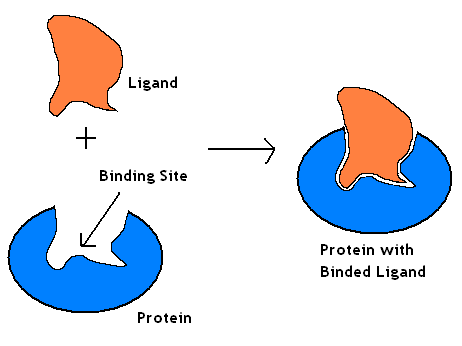
OpenBind's wager is that the bottleneck is not algorithmic ingenuity — there is plenty of that — but rather the raw substrate the algorithms are fed. By treating data production itself as the science, the consortium plans to industrialise the generation of protein–ligand structures the way the Human Genome Project industrialised sequencing. The structural biology community has spent decades arguing that good binding data is a public good; OpenBind is the first effort to put the funding, the synchrotron beamtime, and an explicit AI-training mandate behind that argument at scale.
The release also lands at a moment when AI drug discovery is shifting from speculation to deployment. Insilico Medicine recently reported encouraging Phase IIa results for its AI-designed candidate ISM001-055, several large pharma houses have entered multi-year compute deals with foundation-model labs, and regulators are sketching pilot programmes for AI-aided trials. What has been missing from the open side of that boom is a reliable, growing pool of training-grade data — and that is exactly the gap OpenBind v1 is trying to plug.
Reaction
Fergus Imrie, the Oxford researcher leading the model team, framed the moment in plain terms: "High-quality experimental data is essential for developing new and improved AI models, and this first data release shows that OpenBind now has this foundation in place." That sentiment was echoed across structural biology communities, where researchers who have spent careers wrestling with under-powered datasets welcomed the prospect of a continuously updated, AI-native pipeline.

David Baker, who shared the 2024 Nobel Prize in Chemistry for computational protein design, has been a vocal advocate for open infrastructure since long before this release. His Institute for Protein Design has produced influential open tools such as RoseTTAFold and the Rosetta software suite, and his involvement signals that OpenBind is being designed to slot into that wider open ecosystem rather than compete with it. Industry observers noted that the consortium's mix of academic labs, a national synchrotron facility, and an open-software foundation creates a governance structure unusual for a project of this ambition — closer to a public utility than a typical research collaboration.
Not every reaction has been uncritical. Some commentators have pointed out that 800 measurements, while a strong proof of concept, is still small relative to the scale needed to retrain modern binding-affinity models from scratch, and that the real test will be whether the consortium can sustain the production rate as targets diversify. Others have raised familiar questions about who carries the cost of maintaining open infrastructure once the initial public funding runs its course.
What's Next
The consortium's stated roadmap is striking in scale: more than 500,000 protein–ligand structures over five years, which it estimates would represent roughly twenty times the cumulative output of structural biology in the previous half-century. To hit that, OpenBind is leaning on automated sample preparation at Diamond, parallelised beamline scheduling, and a closed-loop pipeline in which fresh measurements continuously retrain the predictive model.

Future releases are expected on a rolling basis rather than as annual snapshots, mirroring the cadence of open-source software projects more than traditional database releases. Successor models — OpenBind v2 and beyond — are slated to extend coverage from fragment-sized molecules to lead-like compounds, integrate sequence-based protein context from EBI's archives, and explore generative variants that propose new ligands rather than only score existing ones. The UK government has floated headline figures suggesting that a fully matured pipeline could shave as much as £100 billion off long-run drug development costs, although such projections come with the usual caveats about timelines and adoption.
Closing Thoughts
The deeper question OpenBind raises is not whether AI will help find new medicines — it already does — but how the underlying foundations of that work get built and who gets to use them. The dominant model elsewhere in AI has been to keep the most valuable training data private, monetise downstream applications, and license access at a premium. OpenBind is making the opposite bet: that pharma, academia, and AI developers benefit more from a shared, transparent, continuously growing dataset than from carving the problem up among competing silos.

If the model holds, expect more national synchrotrons, cryo-EM centres, and high-throughput screening facilities to consider similar public-data mandates. If it falters — through funding gaps, governance drift, or the gravitational pull of commercial alternatives — the open-science boom in AI may end up looking more like the open-software boom of the 1990s than the public-good infrastructure its founders are aiming for. Either way, 12 May 2026 will be remembered as the moment the experiment moved from white paper to a downloadable file.
한글 요약
영국 주도의 OpenBind 컨소시엄이 5월 12일, AI 신약 개발을 위한 첫 번째 공개 데이터셋과 예측 모델 OpenBind v1을 공개했습니다. 옥스퍼드 대학교와 Diamond Light Source가 공동 주도하는 이 프로젝트는 단 7개월 만에 800건의 고품질 단백질–리간드 결합 데이터를 생산했으며, 이는 전통적인 연구 환경에서라면 수년이 걸릴 분량입니다. 데이터와 모델은 누구나 자유롭게 내려받아 신약 후보를 발굴하거나 자체 모델을 학습시키는 데 사용할 수 있습니다.
이번 공개의 의의는 단순한 모델 출시가 아니라, 그간 AI 신약 개발의 가장 큰 병목으로 꼽혀온 "표준화된 학습 데이터 부족" 문제를 정면으로 다룬다는 점에 있습니다. OpenBind는 자동화된 화학 합성과 고속 X선 결정학을 결합해 단백질 결합 정보를 산업적 규모로 생산하고, 이를 AI 학습에 최적화된 형식으로 지속 공급하는 파이프라인을 구축했습니다. 데이비드 베이커(2024년 노벨 화학상), 프랭크 폰 델프트, 샬럿 딘 등이 공동 리더로 참여하며, 영국 정부 산하 Sovereign AI Unit이 최대 800만 파운드를 초기 투자했습니다.
컨소시엄은 향후 5년간 50만 건 이상의 단백질–리간드 구조 데이터를 확보하겠다는 로드맵을 제시했습니다. 이는 지난 50년간 전 세계 구조생물학계가 축적해온 데이터의 약 20배에 달하는 규모로, 영국 정부는 장기적으로 신약 개발 비용을 최대 1,000억 파운드까지 절감할 수 있을 것이라고 전망합니다. AI 시대의 신약 개발 데이터를 폐쇄형 자산이 아닌 공공재로 만들겠다는 OpenBind의 실험이, 향후 다른 국가 연구 인프라의 데이터 개방 정책에도 영향을 미칠지 주목됩니다.
참고: University of Oxford · openbind.uk · EurekAlert · Diamond Light Source