What Happened
A research team led by Jiale Zhao at the University of Chinese Academy of Sciences has unveiled pUniFind, a unified deep learning model that interprets peptide mass spectra at a scale that no proteomics engine has previously attempted. The work, published on May 25 in Nature Machine Intelligence, describes a transformer-based foundation model trained on more than one hundred million open-search-derived spectra. That training corpus is several orders of magnitude larger than the datasets used to fit earlier de novo sequencing models, and it allows the system to handle peptide-spectrum scoring and zero-shot de novo sequencing inside a single architecture rather than as separate pipelines.

The headline performance numbers come from immunopeptidomics, the corner of proteomics that maps the small peptide fragments displayed on a cell's surface by major histocompatibility complex molecules. On the team's benchmarks, pUniFind identified roughly 42.6 percent more peptides than the prior state of the art on the same raw data. The model also recognises more than 1,300 distinct post-translational modifications, which is the trait that proteomics teams need most when they want to look beyond canonical sequences and ask what is actually decorating a protein inside a real tissue sample.
The release is more than a benchmark paper. The authors published a Windows executable, a Linux deployment, a Code Ocean capsule for reproducibility, and an open repository on GitHub, so independent labs can run the system on their own spectra without waiting for a commercial port. That packaging matters because earlier deep learning proteomics tools often shipped as research code that took weeks to wire into a real pipeline, and the field has been asking for something installable rather than something only its authors could reproduce.
Why It Matters
Mass spectrometry has been the workhorse of modern proteomics for two decades, but its data has always been hard to read. A single tandem mass spectrum contains a noisy ladder of fragment ions that, in theory, encodes the sequence of the peptide that produced it. In practice the signal is sparse, the noise is dense, and most search engines have to rely on a reference proteome to translate the spectrum back into a sequence. That assumption breaks down precisely where biology gets interesting: novel splice variants, mutant peptides in cancer, microbial peptides in mixed samples, or peptides with unexpected chemical modifications.

pUniFind's appeal is that it learns to read those spectra directly. The cross-modality pre-training pairs spectra with peptide sequences, so the model builds an internal alignment between fragment patterns and amino acid strings without being told which database to search. The team reports a 60 percent gain in peptide-spectrum matches over earlier de novo methods, even though the effective search space is roughly 300 times larger than what conventional engines explore. A complementary deep learning quality control stage then recovers another 38.5 percent of peptides that single-pass scoring would have discarded.
For applied research, that combination of breadth and depth is the lever. Cancer immunotherapy pipelines depend on finding neoantigens that the immune system can target; drug developers screening for off-target binding need broad post-translational modification coverage; microbiome teams want to read peptides from organisms that no database fully represents. Each of those questions has been bottlenecked by how much real information current search engines can extract from each spectrum. A foundation model that reads the spectrum directly is the kind of base layer that can change those workflows without forcing every lab to retrain its own network.
Reaction
The proteomics community has tracked this paper since the preprint surfaced on arXiv earlier this year. Discussions on the bioinformatics side have focused less on the headline numbers and more on the deep learning quality control module, which lets the model rescue identifications that classical false discovery rate filters reject. Several independent groups noted on conference channels that the recovered set includes peptides mapped to the human genome but missing from the reference proteome, a category that has historically been very hard to confirm.

Researchers familiar with the pFind ecosystem at the Institute of Computing Technology in Beijing pointed out that pUniFind sits inside a longer arc. Hao Chi, the senior author on the new paper, has co-authored a sequence of open search and validation engines reaching back to pFind 3 and pValid, and the group's earlier work helped define how open searches handle modifications at all. Coverage in specialist outlets framed the release as the moment that pipeline finally crossed from rule-based engines into a true foundation model. Outside specialists have been more cautious, pointing out that benchmark gains in proteomics rarely transfer directly to clinical samples and that an honest reproducibility round on independent immunopeptidomics data will matter more than any single conference demo.
What's Next
The team has signalled that pUniFind will be extended along three axes. The first is broader instrument coverage. The training corpus pulls heavily from Orbitrap and Q-Exactive data, which dominate academic proteomics, but the field is migrating toward newer time-of-flight platforms with different fragmentation patterns. Generalising the model to those instruments is the first thing any commercial group adopting the system will ask for.

The second is clinical proteomics. Immunopeptidomics is already pulling in pharmaceutical interest because of its role in neoantigen-based cancer immunotherapy, and a model that can read more of each spectrum effectively lowers the sample input that a clinical workflow needs. If pUniFind's gains hold up on the smaller, noisier datasets that real biopsies produce, the system can shorten the time between a tissue sample arriving in a translational lab and a candidate neoantigen reaching a target list. That said, regulatory clearance for any clinical decision support stack built on top of it is still a multi-year process.
The third axis is scaling laws. The current model already outperforms tools that were trained on hundreds of times less data, but the proteomics community now has the question that every other deep learning subfield has had to face: does another order of magnitude of spectra yield another step change, or are returns starting to flatten? With the code public and a Code Ocean capsule available, that question is now open to anyone with enough compute and curated spectra to test it.
Closing Thoughts
For most of the past decade, the deep learning story in life science has been dominated by structure prediction and language models trained on protein sequences. Mass spectrometry sits one step earlier in the pipeline, at the point where raw measurements still have to be turned into sequence calls, and it has historically been slower to absorb the same techniques. pUniFind is interesting because it brings the foundation model pattern directly into that data layer rather than treating spectra as a preprocessing step.
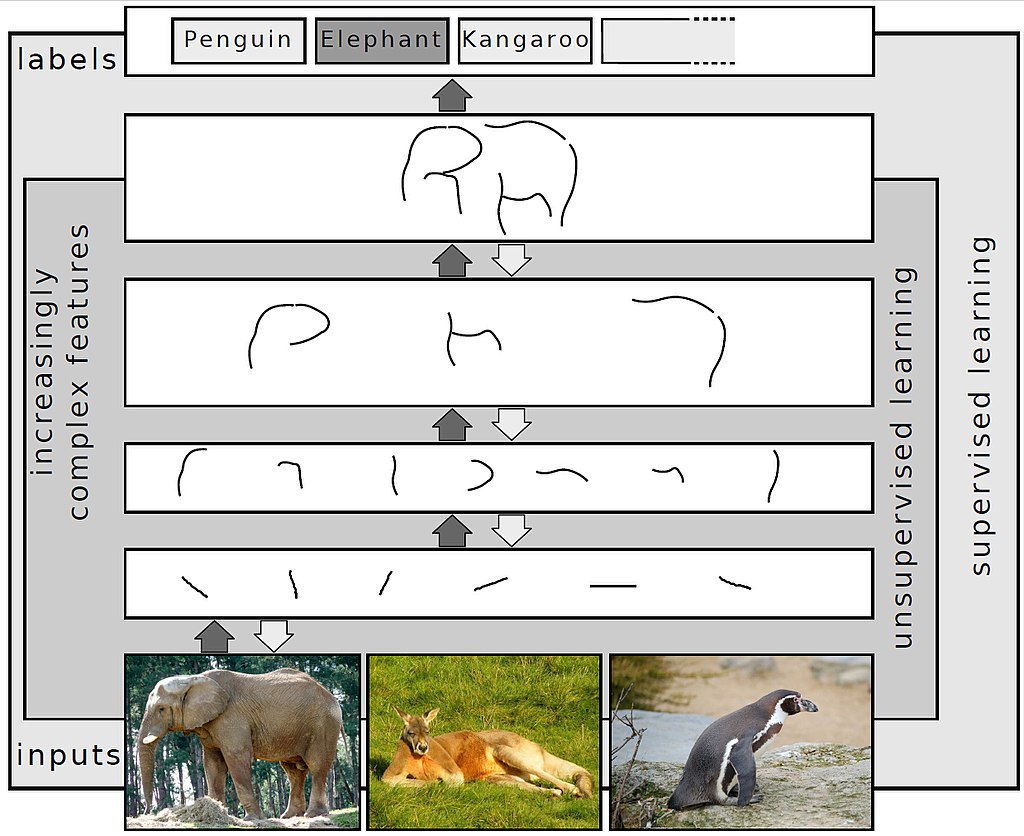
The harder question is what this kind of model means for the labs that have built their workflows around classical search engines. Many of them spent years tuning false discovery rate cutoffs and modification libraries against their own instrument quirks, and a foundation model that subsumes those choices changes the social structure of the field as much as it changes the throughput numbers. Foundation models in proteomics will succeed or fail on whether they let those teams keep that institutional knowledge while gaining the breadth that a 100-million-spectrum training run can offer. The next round of independent reproductions, on data the original authors did not pick, will decide which side of that line pUniFind ends up on.
한글 요약
중국과학원 자오 자레(Jiale Zhao) 연구팀이 5월 25일 Nature Machine Intelligence에 통합 단백질체 해석 모델 pUniFind를 발표했다. 1억 개 이상의 오픈 서치 스펙트럼으로 학습한 트랜스포머 기반 파운데이션 모델로, 펩타이드-스펙트럼 스코어링과 제로샷 디노보 시퀀싱을 하나의 구조에서 처리한다. 면역펩타이드체학 벤치마크에서 기존 도구 대비 식별 펩타이드 수를 42.6% 끌어올렸고, 1,300여 종의 번역후 수식(PTM)을 인식한다.
핵심 성과는 단일 스펙트럼에서 더 많은 정보를 끌어내는 능력이다. 검색 공간이 기존 대비 약 300배 넓어졌음에도 디노보 방식보다 60% 더 많은 PSM(펩타이드-스펙트럼 매칭)을 확보했고, 딥러닝 기반 품질 관리 모듈이 38.5%의 추가 펩타이드를 복원한다. 그 중 1,891개는 인간 게놈에는 매핑되지만 표준 단백질 데이터베이스에는 없는 펩타이드로, 암 면역치료의 네오안티젠 발굴이나 미생물 단백질 해석처럼 참조 서열이 부족한 영역에서 직접적인 가치를 가진다.
코드와 Code Ocean 캡슐, Windows 실행 파일, Linux 배포본이 함께 공개돼 외부 검증 진입 장벽이 낮다는 점이 의미 있다. 다만 임상 표본에서의 재현, 새로운 비행시간형(TOF) 기기로의 일반화, 스케일링 법칙 검증 등 후속 과제가 남아 있어, 단백질체 분야가 실제로 파운데이션 모델 단계로 넘어갔는지는 독립 그룹의 후속 실험이 확정해 줄 것으로 보인다.