What Happened
Generalist AI exited stealth-funding mode on June 4, 2026, with a fresh $400 million round that values the San Mateo startup at $2 billion. Radical Ventures led the deal, joined by 8VC, Union Square Ventures, Hanabi Capital, and existing backers Nvidia and Bezos Expeditions. The financing, first reported by Bloomberg, makes Generalist one of the largest single rounds in the embodied-AI sector this year and instantly pulls the company into the same tier as Skild AI and Physical Intelligence in the race to build a universal "robot brain."

The team behind the round is unusually decorated for a startup barely two years old. Co-founder and chief executive Pete Florence spent years at Google DeepMind as a senior research scientist, where he co-authored the PaLM-E and RT-2 papers that helped define how multimodal models can drive robots. Chief scientist Andy Zeng, another DeepMind alumnus, has published widely on robots that write their own code. Co-founder Andy Barry brings hardware experience from Boston Dynamics. The trio left their previous roles in 2024, set up shop in San Mateo, and have been collecting data and quietly demoing a foundation model ever since.
While the company has not disclosed a customer list, partners familiar with the work say the GEN-class model now drives multiple manipulation rigs across pilot sites, with the new capital earmarked for scaling compute, expanding data collection, and hiring an embodied-AI research bench that is already raiding rival labs.
Why It Matters
The investment lands inside a robotics moment that increasingly resembles the early days of large language models, with capital and talent piling into a small handful of labs racing to build a generalist control system. Physical Intelligence has raised hundreds of millions for its π-series models. Skild AI is reported to be worth more than $14 billion after a $1.4 billion raise, and Nvidia continues to seed companies that plug into its Isaac and Cosmos software stacks.

Generalist's GEN-0 model, first shown publicly at Nvidia's GTC 2026 conference, was trained on roughly 500,000 hours of real-world robot interaction data. The company says it has logged near-99% task success on benchmark manufacturing and logistics jobs, an unusually concrete number for an industry that still leans on cherry-picked highlight reels.
What sets the Generalist pitch apart, according to people familiar with the round, is the team's argument that scaling embodied data along the same curve language-model labs used for text will eventually unlock truly general-purpose behavior. Florence has repeatedly framed the problem as "scaling embodied intelligence" rather than designing bespoke policies for each robot type. The new capital gives the company runway to chase that thesis with larger clusters and far more on-robot data collection across partner factories.
Reaction
Investor enthusiasm reflects how concentrated the bet has become. Radical Ventures, which led the round, has been one of the most prolific backers of foundation-model companies, and the inclusion of 8VC and Union Square Ventures adds a generalist consumer-tech pedigree to the cap table. The continued participation of Nvidia and Bezos Expeditions — both of which seeded the company before it had a public product — signals that early believers are doubling down rather than cashing out, a pattern that quietly became a hallmark of late-stage AI rounds across 2025 and 2026.

On the operator side, partners have been talking up Generalist's GTC demo, in which two UR7e arms autonomously packaged smartphones using the GEN-0 model, as a step beyond canned warehouse choreography. Universal Robots, which hosted the demo, treats the work as evidence that the long-promised "lab-to-factory" gap for AI-driven manipulation is finally narrowing. Analysts who follow industrial automation say the harder question is whether $400 million is enough to keep pace with rivals whose war chests are several times larger.
What's Next
The company has not disclosed a public price list or a product brand, and Florence has indicated that the immediate priority is scaling the foundation model and its training data rather than shipping a turnkey product. Generalist plans to expand its real-world data collection through pilot deployments with industrial partners, build out its San Mateo engineering team, and continue using Nvidia's Cosmos world models for synthetic data generation.

A public release of a successor model — internally referred to as the next generation of GEN-class systems — is widely expected within the next twelve months, though the company has been careful not to commit to a date. Customers are also waiting to see whether Generalist will license its model to robot makers in the style of Skild's omni-bodied pitch, or pair it more tightly with a single hardware partner.
Industry watchers note the firm has so far been platform-agnostic, demoing on UR arms and showing willingness to integrate with mobile bases, which suggests a horizontal licensing strategy is on the table. The next twelve months will likely settle that question and reveal whether Generalist's bet on data scaling holds up against Physical Intelligence's, Skild's, and Google DeepMind's parallel efforts.
Closing Thoughts
Two years ago, a "robot brain" pitch deck would have struggled to justify a $2 billion valuation without a shipping product. The arrival of frontier multimodal models, falling training costs, and a steady cadence of credible manipulation demos has rewired investor patience. Generalist's raise reads less like a moonshot and more like a referendum on whether the same scaling story that vaulted text-only labs into the trillion-dollar conversation can repeat itself in physical systems.
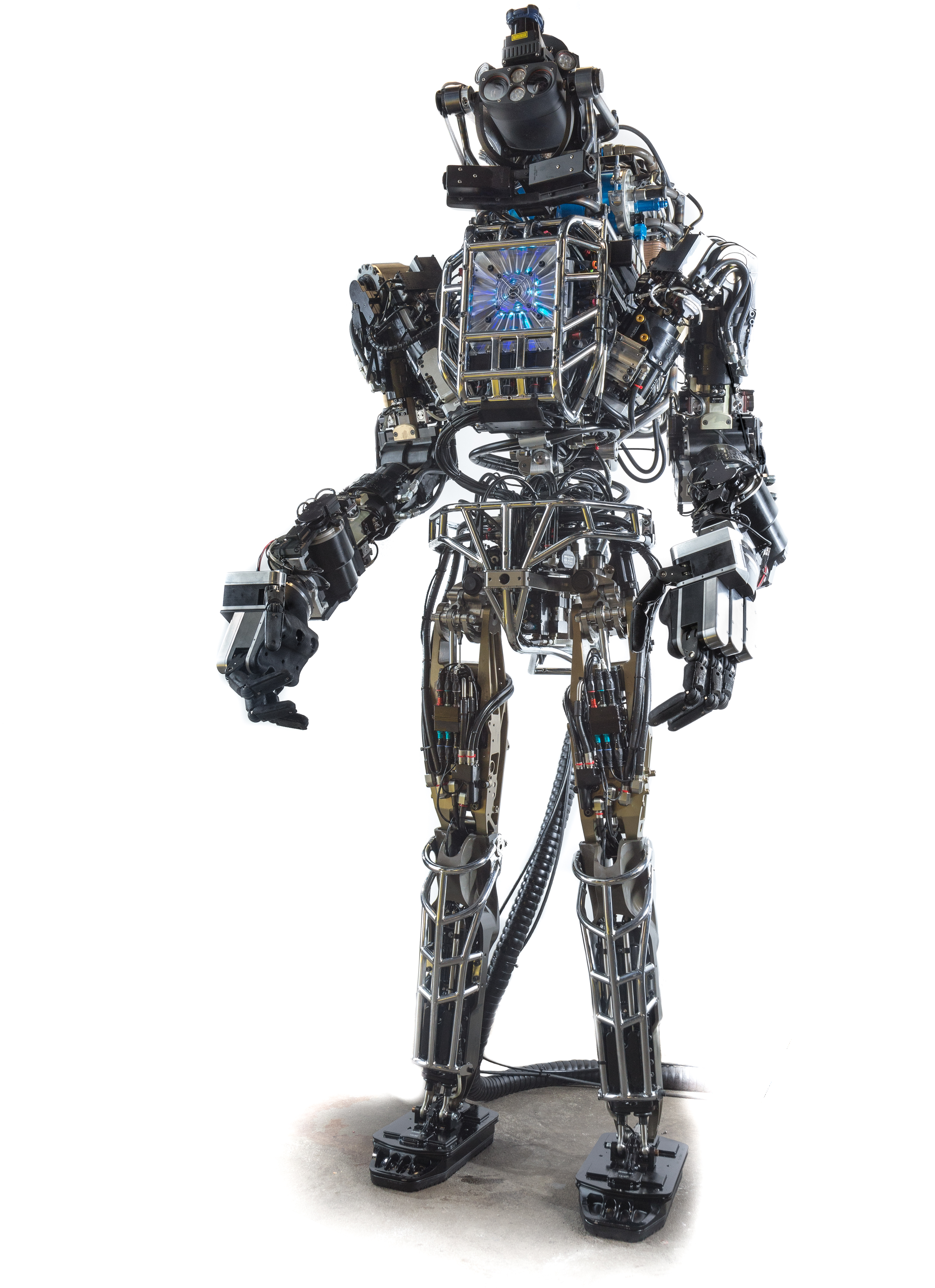
If it can, the winners of this race will own much more than a software stack; they will own the operating system for every robot that has yet to be built. Whether Generalist becomes that winner, a strong second, or a cautionary tale about overheated valuations is impossible to call from a single funding announcement. What is clear is that the embodied-AI sector now has an unmistakable lineup of well-capitalized contenders, and the experimental phase of the field is giving way to a more familiar, capital-intensive race for foundation-model dominance.
한글 요약
로봇용 범용 AI 모델을 개발하는 미국 스타트업 Generalist AI가 6월 4일 4억 달러 규모의 신규 라운드를 마감하며 기업가치 20억 달러를 인정받았습니다. Radical Ventures가 주도하고 Nvidia, Bezos Expeditions, 8VC, Union Square Ventures, Hanabi Capital이 참여한 이번 라운드는 Skild AI, Physical Intelligence와 함께 "로봇용 파운데이션 모델" 경쟁에 대형 플레이어를 한 명 더 등장시켰다는 의미가 있습니다.
회사의 핵심 인력은 구글 딥마인드 출신 Pete Florence(CEO)와 Andy Zeng(수석 과학자), 보스턴 다이내믹스 출신 Andy Barry로 구성돼 있으며, GEN-0 모델은 약 50만 시간 분량의 실제 로봇 데이터로 학습돼 제조·물류 벤치마크에서 99%에 가까운 성공률을 보고했습니다. GTC 2026에서는 두 대의 UR7e 로봇팔이 스마트폰 포장 작업을 자율 수행하며 "랩에서 공장으로" 가는 간극을 한층 좁혔다는 평가를 받았습니다.
이번 자금은 모델 규모 확장과 산업 파트너와의 실데이터 파일럿 확대, 엔지니어링 인력 채용에 우선 투입될 전망입니다. 시장에서는 Generalist가 자체 하드웨어를 만들기보다 다양한 로봇에 모델을 라이선스하는 수평 전략을 택할 가능성에 주목하고 있으며, 향후 12개월간 공개될 후속 모델과 실제 배치 사례가 이 거대한 베팅의 향방을 가를 분기점이 될 것으로 보입니다.